
Radiator not getting warm
Radiator not getting warm: thermostatic valve stuck
Especially after the summer, the valve pin on a radiator often gets stuck. With a little patience and no special tools you can usually fix it yourself – here is how to do it safely.

Schematic illustration
Why does the radiator stay cold?
Inside the thermostatic valve there is a small valve pin. Depending on the room temperature, the thermostatic head pushes it in and the valve closes. When the head eases off, the pin springs out and warm heating water flows into the radiator.
If the valve stays closed for a long time over the summer, the pin can get stuck. The radiator then stays cold even though the heating is running. Often, however, there is a simple cause: a wrong setting, air in the radiator or a fault in the whole heating system.
As of October 2026. These instructions apply to common radiators with thermostatic valves in flats and single-family houses.
First check: setting and room
- Thermostatic head: If it is set to the snowflake or star symbol, it only provides frost protection. Turn it to 5 and wait a few minutes.
- Room already warm: Once the set temperature is reached, the valve closes. A cool radiator is then normal.
- Sensor covered: Curtains, furniture or covers in front of the thermostatic head trap heat. The head thinks the room is warm and closes too early.
- Electronic thermostatic head: Check the batteries, the timer programme and the window contact.
- Other radiators: If they are all cold, the problem usually lies with the heating system itself, not with the valve.
How a radiator with a thermostatic valve is built
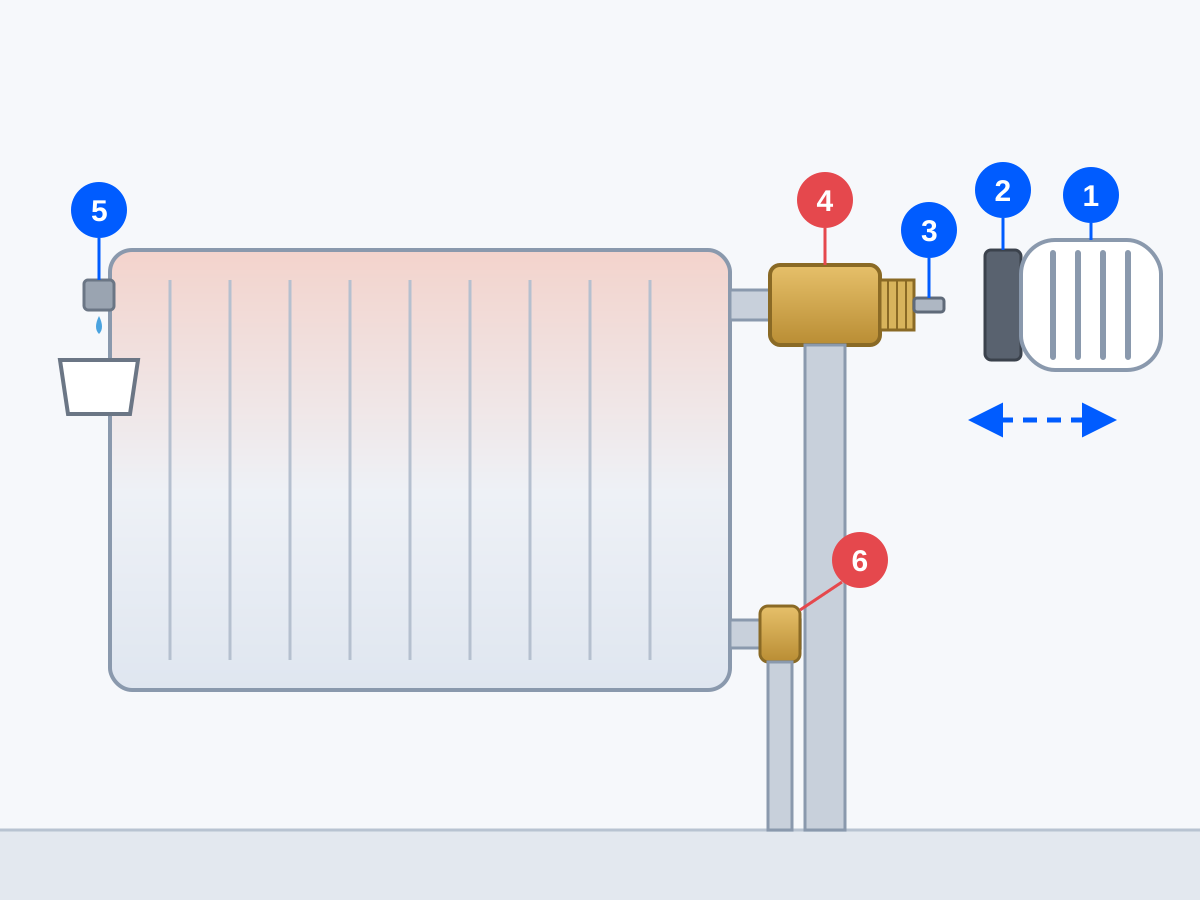
Step by step
Freeing a stuck thermostatic valve yourself
You only work on the thermostatic head and the valve pin. The valve stays closed and installed, and no water comes out.
- Get your tools readyYou need a cloth, a small container, combination pliers (wrap the jaws in a cloth) and a little penetrating oil or silicone spray. For bleeding you also need a bleed key.
- Turn the thermostatic head to 5In the highest position the head presses least on the valve pin. This makes it easier to remove and to put back on later.
- Remove the thermostatic headWith a union nut, loosen it by hand anticlockwise. With clamp or snap-on connections, release the ring or lever as the manufacturer intends. Do not pull with force, and take a photo first.
- Check the valve pinThe small metal pin sticks out of the valve by a few millimetres. Press it in with your finger or a blunt object: it should give slightly and come back out by itself. If it stays stuck, the valve is jammed.
- Free the valve pinCarefully grip the pin with the wrapped pliers and move it gently back and forth, or tap it lightly from the side with the pliers handle. Then press it in several times and let it come out until it moves freely. Do not pull the pin out and do not bend it.
- Use only a little lubricantPut a drop of penetrating oil or a short burst of silicone spray on the pin, move it a few times and wipe off the excess.
- Refit the thermostatic headFit the head in position 5 and tighten the nut by hand or let the clamping ring click into place. If the heating is running, the radiator should get warm after a few minutes. Then set the level you want.
Bleeding
Bleeding a radiator
If the radiator gurgles or is cold at the top and warm at the bottom, air has collected. You let it out with a bleed key.
- PrepareTurn the thermostatic head to 5 and hold a cloth and a container under the bleed valve. The valve is usually at the top, on the side of the radiator.
- Open slowlyFit the bleed key and slowly turn it about a quarter to half a turn anticlockwise. If air escapes, you will hear a hiss.
- Close againAs soon as water comes out steadily without air bubbles, close the valve clockwise. Do not overtighten it, and catch the water.
- Read the pressure gaugeOnly read the system pressure on the heating system's pressure gauge. If the needle is below the marked range, inform the owner, the caretaker or a specialist company. Topping up is their job.
Important: After bleeding, a little water is missing from the system. If the pressure keeps dropping or you often have to bleed, a specialist company should look for the cause.
Other causes
If it is not the valve pin
The way the radiator behaves often shows where the problem lies.
| What you notice | Possible cause | What to do |
|---|---|---|
| Whole flat or whole house cold | Heating off, in summer mode, faulty or too little pressure | Inform the property management or the caretaker. In your own house, read the fault display and call the specialist company. |
| Cold at the top, warm at the bottom, gurgling | Air in the radiator | Bleed the radiator and then read the pressure. |
| Much colder at the bottom than at the top | Sludge or deposits in the radiator | Call in a specialist company: flush the radiator or the system. |
| Nearby radiators hot, distant ones only lukewarm | Missing hydraulic balancing | Call in a specialist company: the water flow is adjusted to each radiator. |
| Completely cold although the valve pin moves | Thermostatic head or valve insert faulty, return closed | Call in a specialist company: check the valve, replace the head or the valve insert. |
Safety: what you should not do
- Do not put pliers or a spanner on the valve body or the fittings.
- Never unscrew the valve insert: the heating water is under pressure and will come out immediately.
- Do not pull out or bend the valve pin, and do not hit it hard with a hammer.
- Avoid water damage: keep a cloth and a container ready and protect sensitive floors.
- If water comes out at the valve pin or the valve, stop immediately, catch it with the cloth and call the caretaker or a specialist company.
- Do not top up the heating system yourself and do not change any settings on the boiler or the heat pump.
When you should call a professional
- The valve pin still does not move after several attempts.
- Water is leaking from the valve, the pin or a fitting.
- The pressure keeps dropping or the radiator often has to be bled.
- Several radiators stay cold or are cold at the bottom.
- Some rooms never get properly warm.
- The thermostatic head or the valve is old or faulty and should be replaced.
As of October 2026, no guarantee. The information from the manufacturer of your thermostatic valve and the rules of your property management take precedence.
Read more
Services
Planning, building permits, installation, maintenance and repairs – for all brands
FAQ
Questions about a cold radiator
Why does my radiator not get warm after the summer?
The valve pin in the thermostatic valve often gets stuck because the valve was closed for months. Remove the thermostatic head and carefully move the pin until it comes back out by itself.
How can I tell if the thermostatic valve is stuck?
With the thermostatic head removed, you can press the valve pin in and it should come back out by itself. If it does not move or stays in, the valve is stuck.
As a tenant, may I remove the thermostatic head?
Removing the head, freeing the pin and bleeding are simple tasks. If in doubt, check with the property management or the caretaker what you may do yourself, and always report bigger problems.
Why is the radiator cold at the top and warm at the bottom?
In that case air has usually collected in the radiator. Bleed it with a bleed key and then read the pressure on the heating system's pressure gauge.
May I top up the heating system myself?
No, only read the pressure. Topping up is a job for the owner, the caretaker or a specialist company.
When do I need a specialist company?
If the pin cannot be freed, water leaks, the pressure keeps dropping or several radiators stay cold. You can reach Infra Haustechnik on 076 358 43 21, all over Switzerland.
Let’s discuss your project
Radiator stays cold? Call us or write to us – all over Switzerland.